
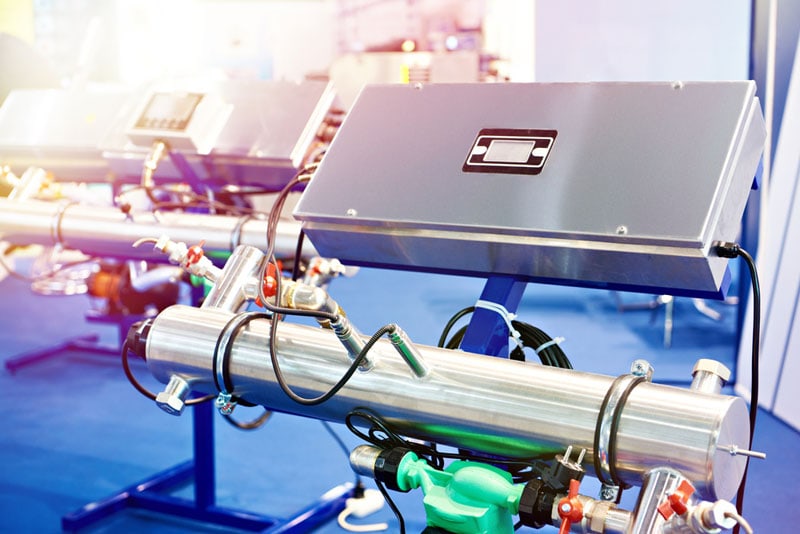
Water is essential for life, and its purity is critical for health and well-being. With increasing concerns over water quality, ultraviolet (UV) disinfection has gained popularity as a highly effective method for treating water. UV disinfection water treatment leverages the power of UV light to neutralize harmful microorganisms, providing a safe and efficient solution for water purification. In this blog, you will learn the science behind UV disinfection, its benefits, and its various applications in water treatment.
What is UV Water Disinfection?
UV water disinfection is a treatment that employs ultraviolet (UV) light to inactivate dangerous microorganisms present in water. It is a highly effective way of purifying water by destroying the DNA or RNA of bacteria, viruses, and protozoa, so they cannot reproduce and infect the body. UV disinfection is widely practiced in both domestic and commercial disinfection systems because of its chemical-free nature. It delivers clean, safe water by eliminating the potential of waterborne disease-causing contaminants without changing the taste, smell, or chemical composition of water.
How UV Water Disinfection Works?
UV water disinfection purifies water by sending water through a chamber containing UV lamps that emit UVC radiation. The UV light kills microorganisms by entering their cells and degrading their DNA, so they cannot reproduce or harm them. In contrast to chemical disinfection practices, UV light does not introduce chemicals into the water, and the water remains free from residual byproducts. The UV disinfection systems operate quickly and use minimal contact time. They kill numerous forms of germs, such as bacteria, viruses, and protozoa. For maximum effectiveness, these systems are usually employed in conjunction with other filtration techniques.
8 Key Benefits Of UV Disinfection
The advantages of UV disinfection include:
Effective Against A Broad Spectrum of Pathogens
UV disinfection is effective against waterborne pathogens, including bacteria (e.g., E. coli, Salmonella), viruses (e.g., Hepatitis, Norovirus), and protozoa (e.g., Giardia, Cryptosporidium). This spectrum of pathogens can cause serious health issues if ingested, making UV treatment a vital tool for ensuring safe drinking water.
Chemical-Free Disinfection
Unlike traditional disinfection methods such as chlorination, UV disinfection does not require the addition of any chemicals. This means there are no harmful by-products, such as trihalomethanes (THMs), which can pose health risks. UV treatment is a green technology that minimizes environmental impact and preserves the natural quality of the water.
No Impact On Water Taste Or Odor
Because UV disinfection is a physical process, it does not alter the water’s taste, color, or odor. This makes it an ideal choice for applications where maintaining the water’s natural characteristics, such as bottled water production and food processing, is important.
Low Maintenance And Operating Costs
UV systems are generally easy to maintain and have low operating costs. The primary maintenance task involves replacing the UV lamps periodically, typically once a year or as the manufacturer recommends. UV disinfection systems are also energy-efficient, making them cost-effective for long-term use.
Environmentally Friendly
Since UV water treatment does not involve chemicals, it is an environmentally sustainable option. Unlike chemical treatments that can contribute to pollution, no harmful by-products are released into the water, air, or surrounding surfaces. Additionally, the system uses relatively low energy, making it more sustainable over the long term than other methods requiring more intensive chemical production or disposal resources. This makes UV treatment a key player in achieving higher surface disinfection and sterilization levels while reducing the overall environmental impact.
Easily Integrates With Other Water Treatment Systems
UV water treatment can be effectively combined with other purification methods for a multi-barrier approach to water safety. For instance, it can be paired with reverse osmosis (RO) systems or activated carbon filters to remove biological contaminants and chemical pollutants. This flexibility allows users to tailor their water disinfection solutions to their specific needs, ensuring that microorganisms and chemical impurities are removed. Studies and research show that UV disinfection can significantly enhance the overall efficacy of water purification systems, making it a reliable choice for diverse applications.
Energy-Efficient And Sustainable
Compared to other water purification technologies, UV systems are relatively energy-efficient. They consume only a small amount of electricity—around the same as a 60-watt light bulb—making them sustainable and cost-efficient, especially when used continuously. This low energy consumption reduces energy usage and carbon footprints in residential and industrial hospitals or healthcare settings. Industry professionals emphasize the long-term sustainability of UV systems, especially in light of growing environmental concerns during the COVID-19 pandemic, where maintaining high levels of surface disinfection and hygiene is paramount.
Cost-Effective Over Time
While the initial setup cost of a UV water treatment system may be higher than that of some chemical-based systems, it is highly cost-effective in the long run. Once installed, the system requires little energy—comparable to a standard light bulb. Additionally, no ongoing costs are associated with purchasing chemicals, making it a more economical choice. The long operational life, fewer moving parts, and low maintenance requirements have proven valuable assets for commercial and residential users seeking effective water disinfection solutions.UV systems have a long operational life, fewer moving parts, and low maintenance requirements.
Disadvantages of UV Disinfection
- Limited Contaminant Removal: UV disinfection will only kill microorganisms and will not remove other contaminants like heavy metals, salts, chlorine, and artificial chemicals like petroleum and pharmaceuticals.
- Power Dependency: UV systems need electricity to operate. It is a low-energy consumption method and uses only 30-40 watts per hour. However, in the event of a power shutdown, the system is likely not to operate. Therefore, it is not ideal for emergency or survival applications unless provided with backup power.
- No Long-Term Protection: Unlike chemical disinfectants, UV treatment does not provide long-term residual protection in water. As soon as the water is cleaned and disinfected and goes through the system, it’s immediately susceptible to re-contamination.
- High Initial Cost: Although UV systems offer low operating expenses, the initial installation and equipment costs can be substantial. Rapid returns on investment counter this because of low maintenance and energy usage.
Conclusion
UV disinfection water treatment is reliable and eco-friendly to ensure water safety. Its ability to effectively neutralize a broad range of pathogens without using chemicals makes it an attractive option for various applications, from municipal water treatment to residential use. As the demand for safe and clean water grows, UV disinfection technology is poised to play a critical role in meeting this essential need.
Frequently Asked Questions
Is UV water disinfection effective?
UV disinfection is very effective in killing or deactivating a broad spectrum of pathogenic microorganisms, such as bacteria, viruses, and protozoa. The effectiveness varies with the duration of exposure, water quality, and intensity of UV radiation.
Does UV disinfection eliminate chemicals from water?
No, UV disinfection effectively inactivates microorganisms but does not destroy chemical contaminants, heavy metals, or particulate matter.
How frequently do I replace UV lamps?
UV lamps usually require replacement every 12-18 months, depending on the use of the system and manufacturer recommendations, to provide maximum disinfecting efficiency.
Can UV disinfection systems be used for all types of water sources?
UV systems can be used for most potable water sources, but the water must be clear for effective disinfection. In highly turbid water, pre-filtration may be necessary for optimal results.
Does UV water disinfection work for viruses like SARS-CoV-2?
Yes, UV disinfection is effective in neutralizing viruses, including SARS-CoV-2, when the water is properly exposed to UV radiation for the required duration.