Destroy Mold.
Without Tearing Down Your Walls.
Traditional remediation takes weeks and destroys drywall. Our micro-mist fog permeates every hidden cavity to eradicate mold spores at the root in less than 24 hours — backed by our 12-Month Free Re-Treatment Warranty.
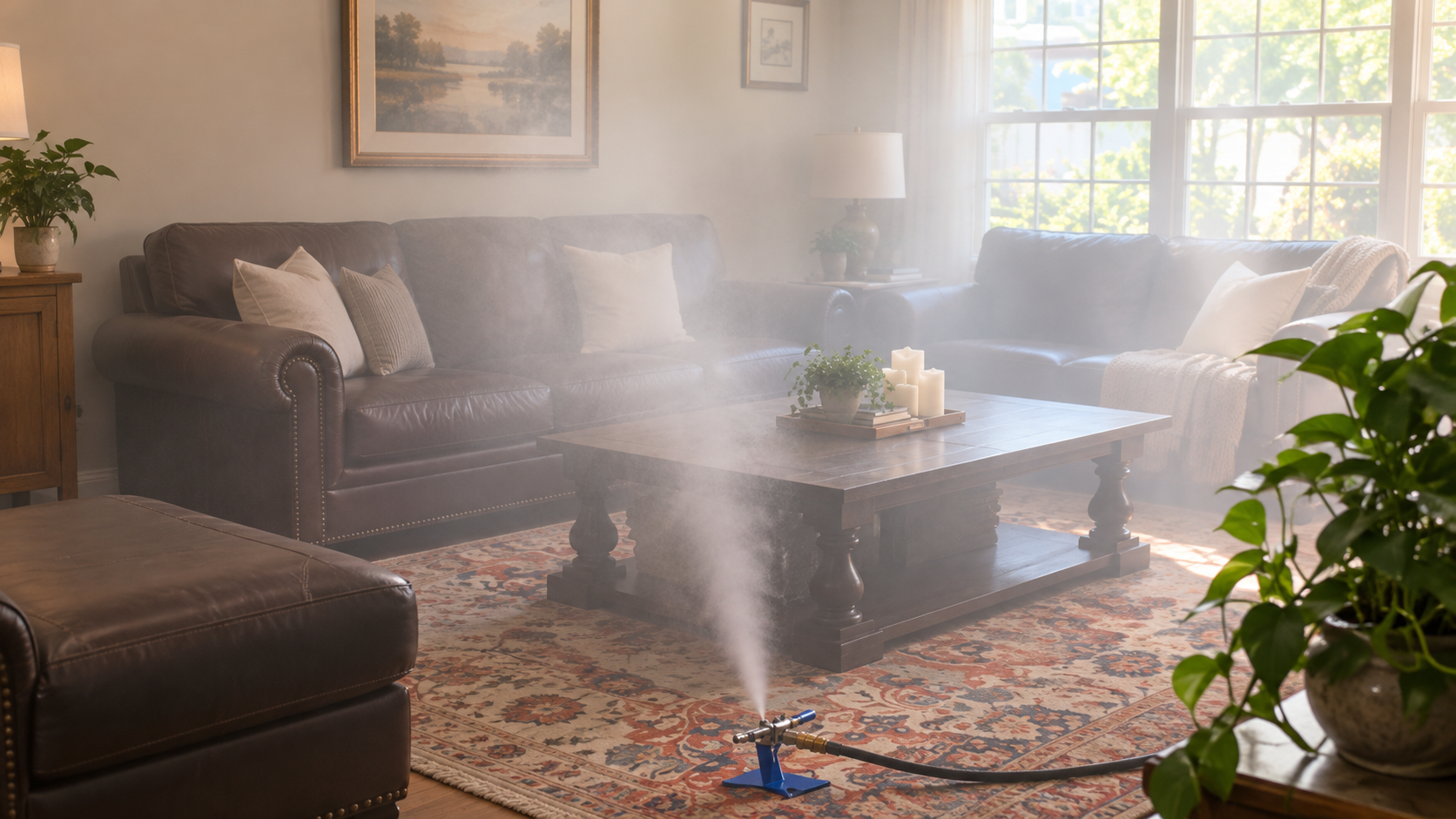
Demolition-Free Micro-Particle Fogging
Fills every cubic inch of your room, HVAC ductwork, and wall cavity without wet chemical residue.
Credibility / Achievements / Awards
Backed by the nation's most stringent independent environmental inspection and remediation standards.


Demolition-Free Dry Fog vs. Traditional Tear-Out
Adjust the property size below to see how our micro-particle dry fog penetrates every surface without destroying walls, saving you thousands.
Mold Assassins Dry Fog
Zero Demolition • 100% Non-Toxic
Save ~$21,250 vs traditional contractors
- Completed Same Day — You'll be sleeping in your own beds the same day of treatment
- Zero Wall Tear-Outs: Preserves drywall & trim
- Whole-Structure Fog: Treats the HVAC system, all the ducts, and every room in the premises
- 12-Month Warranty: Free re-treatment if mold returns
Old "Rip-Out & Replace"
Messy Construction • Days or Weeks

+ Reconstruction & drywall installation fees
- Takes 1 to 3 WEEKS of construction chaos
- Displaces family or shuts down business
- Disturbs hidden spores, spreading dust elsewhere
- Requires costly drywall repair & paint sub-contractors
100% Free Inspection • No pressure • Written line-item transparent estimate
See Our Dry Fog In Action
This is what demolition-free remediation actually looks like. Our hospital-grade dry fog generator fills every cubic foot of air, bouncing off furniture and permeating drywall, baseboards, and HVAC ducts — eliminating hidden mold spores without tearing a single wall down.
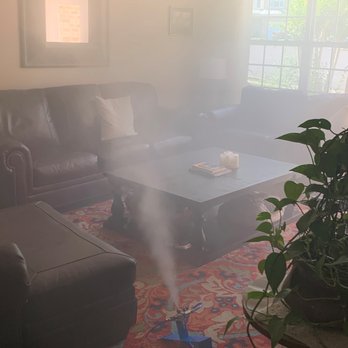
Dry Fog Diffusion in Living Area
Our specialized dry fog generator infusing an entire residential living room. The microscopic droplets bounce like gas molecules — enveloping sofas, rugs, lighting fixtures, and air spaces without wetting or staining porous fabrics.
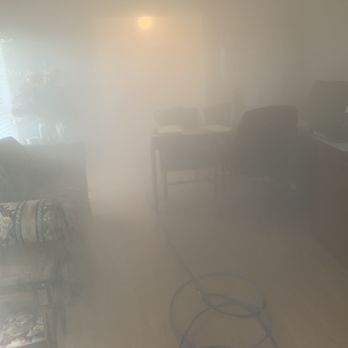
Total Structure Volume Saturation
Full room saturation achieved in minutes. The dense fog permeates interior wall cavities, drywall voids, ceiling junctions, and returns through the HVAC duct system to sterilize the home from floor to roofline.
Dry Gas-Like Microparticles
Droplets measure less than 7 microns — smaller than red blood cells. They bounce off surfaces without wetting them, behaving like gas to permeate porous materials.
HVAC & Duct Sanitization
We circulate the dry fog through the air handler so trunk lines, supply vents, and hidden plenums are completely decontaminated — stopping recurring re-infestation.
Sleep In Your Bed Tonight
No moving into hotels or living in a plastic dust bubble for 3 weeks. Treatment wraps in ~6 hours and leaves zero toxic chemical residues behind.
Our Specialized Mold & Air Quality Services
From pinpointing hidden moisture with thermal imaging to complete dry fog sanitization, we safeguard your home's air purity.
Mold Removal & Remediation
Our dry-fog process penetrates drywall, carpeting, fabrics, and ductwork to sterilize microscopic mold spores without costly demolition or mess.
- Zero Wall, Ceiling, or Floor Tear-Outs
- 100% Non-Toxic & Pet-Safe Chemicals
- Includes 12-Month Free Re-Treatment Warranty
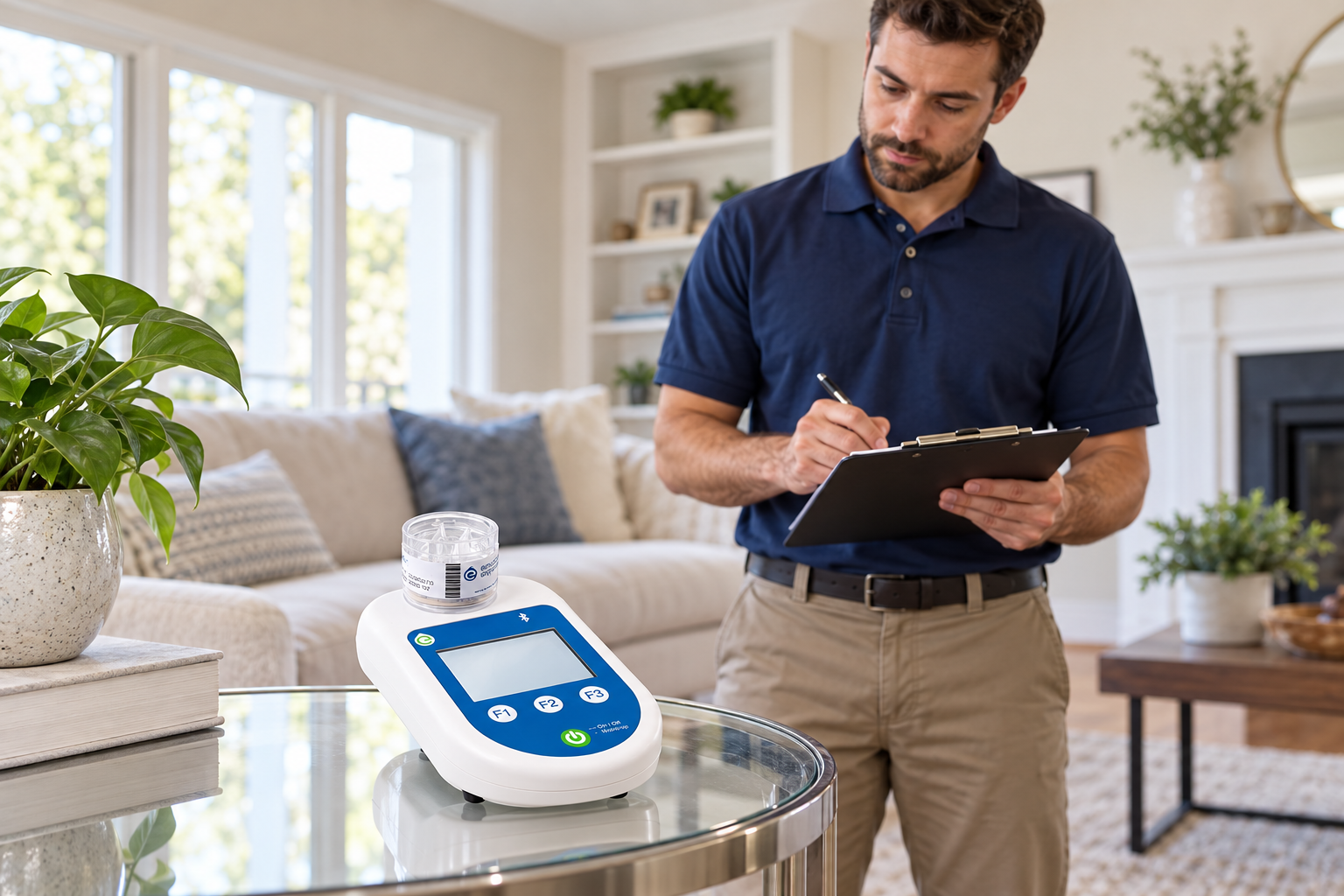
Air Quality Testing & Lab Analysis
Invisible spores behind walls cause unexplained allergies, headaches, and mold odor. We perform certified air sampling sent to independent accredited labs.
- Independent AIHA Accredited Lab Results
- Identify Exact Mold Species & Spore Count
- Post-Treatment Clearance Verification

Sanitizing & Commercial Disinfection
Protect schools, daycare facilities, fitness gyms, offices, and medical clinics against airborne viruses, bacteria, and persistent odors.
- EPA-Registered Virucidal & Antibacterial
- Safe for Electronics, Desk Surfaces & Gyms
- Zero Chemical Residue or Odor
Who We Serve Across Georgia
Whether you are a home buyer facing a strict closing window or a property manager needing zero tenant disruption, we customize our remediation plans.
Homeowners & Families
Protect loved ones from invisible toxic black mold and allergen buildup without ripping up floorboards or drywall.
Real Estate Agents
Fast 24-48h inspection reports & swift treatment so mold findings never kill a home sale contingency.
Property Managers
Minimal tenant disruption. Treat entire apartment buildings or offices in a single day with zero tear-outs.
Home Inspectors
Provide client-ready lab air testing solutions and instant referral-grade remediation plans.
Healthcare Professionals
When mycotoxin testing points to mold, refer your patient to a remediation partner who understands mold-illness patients — lab-backed air sampling, zero-VOC dry fog, and documented clearance.
Daycare Centers
Protect children and staff with whole-structure hospital-grade fogging that eradicates airborne viruses, bacteria, and mold spores across classrooms and nap areas.
Schools & Universities
Campus-wide mold and pathogen control for classrooms, dormitories, cafeterias, gymnasiums, and HVAC systems — treated at scale with zero student displacement.
Fitness Gyms & Studios
Eliminate persistent locker-room odors, bacteria, and fungal spores from high-touch surfaces, equipment mats, and high-humidity areas without chemical residue.
Med Spas & Health Facilities
Maintain sterile, mold-free treatment rooms and waiting areas for immune-sensitive patients. Our dry fog penetrates every cavity your wipes and sprays can't reach.
What Our Customers Say
See how our dry-fog technology saved local homeowners time, hassle, and thousands of dollars.
"The team of Marshall and Vince was professional, efficient, and knowledgeable in removing mold from my home. The communication throughout was excellent, they answered all our questions, and the results were verified with clean air testing. Top-notch service!"
"The team at The Mold Assassins were incredible. They walked us through the entire process explaining exactly how they were going to handle our mold problem and completed the job precisely as explained. The after-treatment Air Quality test proved the thoroughness of their process! We highly recommend The Mold Assassins."
"Hiring The Mold Assassins was a 'No-Brainer'! Instead of having a crew come out and rip my house apart to get at all the mold, the team was able to completely remove ALL the mold and ensure our HVAC system was clean within a 6-hour time span."
Frequently Asked Questions
Don't Let Budget Delay Your Family's Health
Remediation cannot wait. We partner with leading lenders to offer zero-friction monthly installment plans from $500 up to $200,000 with quick 1-day funding.
No interest when paid in full during promo period.
Simple online pre-qualification with no soft credit hit.
Financing powered by Enhancify— soft credit check, no impact to your score
Monthly Payment Calculator
Estimate low monthly payment tiers
Financing powered by Enhancify— soft credit check, no impact to your score
Silent. Swift. Demolition-Free. The Mold Assassins In Action
Mold hides in your HVAC ducts, under sinks, and behind wall cavities. Like true assassins, our demolition-free dry fog hunts down and eliminates spores where no vacuum or scrub brush can ever reach.
Mold Intelligence System™
Our proprietary AI knowledge system that cross-references building volume, thermal moisture readings, and lab spore counts to formulate custom dry-fog treatment protocols.
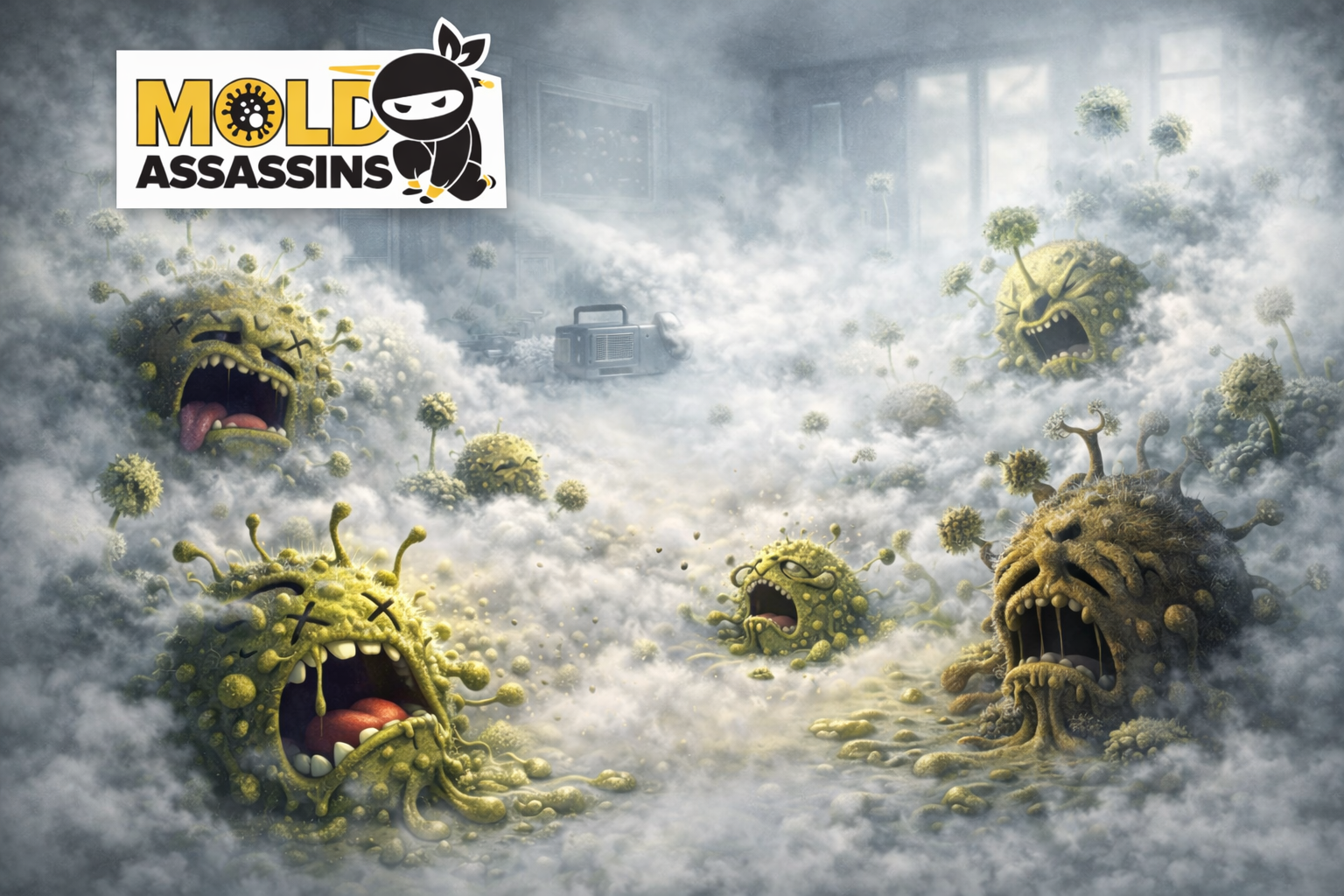
The Dry Fog Knockout
Our hospital-grade dry-fog cloud surrounds, penetrates, and neutralizes live mold spores floating in the air and embedded on surfaces.

The Spore Slayer
Striking at the root of toxic mold colonies before they spread through your home's air supply and ventilation.

Clearing the HVAC & Ducts
The Mold Assassin confronts colonies nesting inside HVAC supply lines, return plenums, and mechanical boxes.
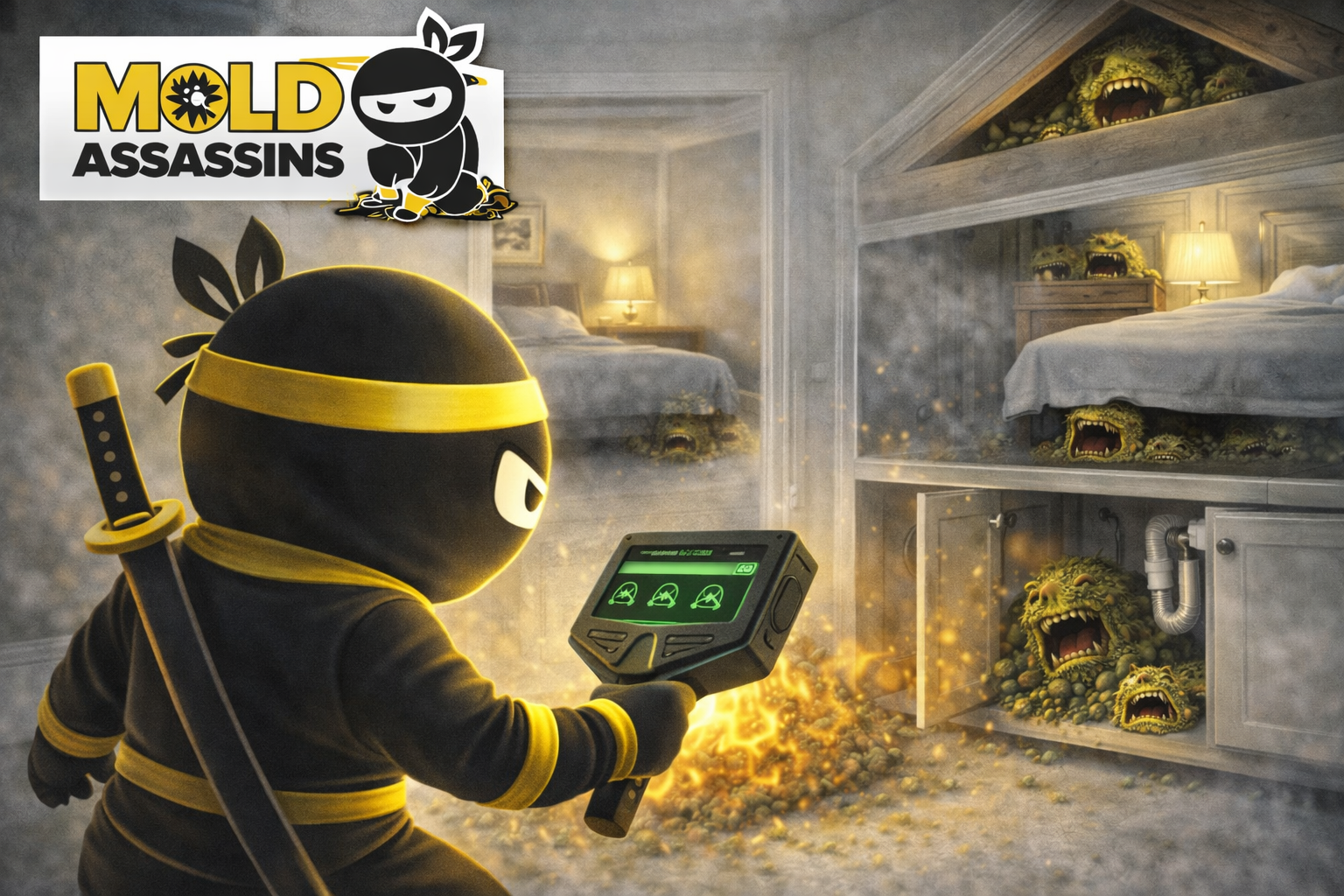
Thermal Scanner Cavity Hunt
Tracking down hidden moisture pockets behind cabinets, baseboards, and ceiling cavities with precision FLIR® thermography.
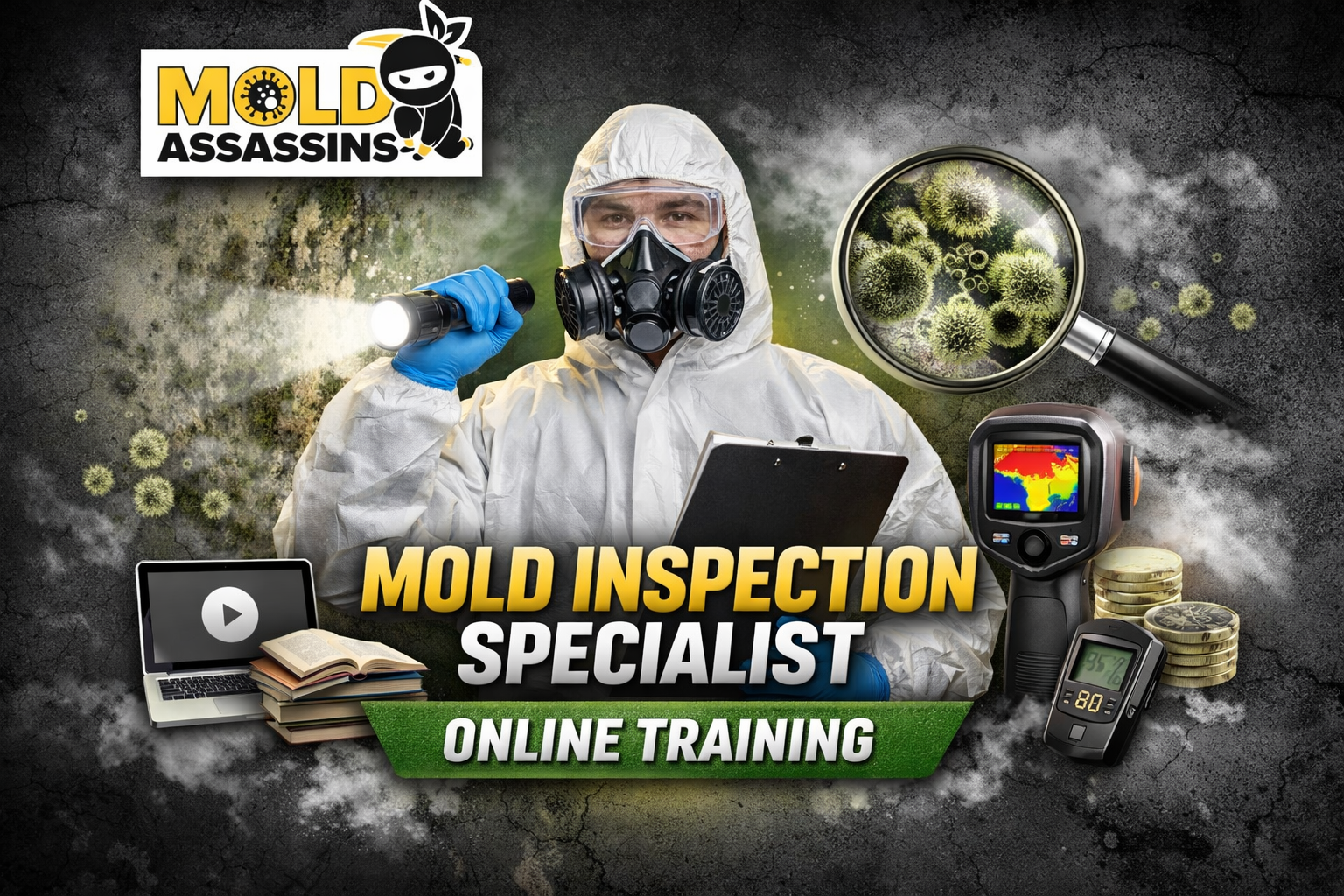
Certified Mold Specialist
Our team combines cutting-edge inspection tools — thermal FLIR®, hygrometers, lab cassettes — with expert field experience.
HVAC Plenums & Ductwork
We treat the air system first. Dry fog sweeps every trunk line, drop, and register so re-circulated air never re-infects your home.
Zero Demolition Needed
Sub-micron particles reach behind baseboards, under cabinets, and through drywall seams without saws, sledgehammers, or dust barriers.
Done In Approximately 6 Hours
The entire structure is treated in a single day. You return that evening to clean, safe, mold-free air backed by our 12-Month Re-Treatment Warranty.
From Scary Inspection Alert to Happy Closing Day
See how The Mold Assassins rescues real estate transactions when mold is discovered during due diligence. Instead of weeks of noisy demolition that kill deals, our ~6 hour dry-fog treatment delivers certified lab clearance and lets buyers hold their keys on time.

1. The Report Raises a Concern
"A mold finding. A lot of questions."
A home inspection report flags a mold finding during the due diligence period. Both the buyer and agent are hit with unexpected questions, wondering if the closing will be delayed or cancelled.

2. Uncertainty Takes Over
"The right home. An unexpected concern."
It is the right home, but now an unexpected concern clouds the purchase. Buyers worry about indoor air quality, hidden spores behind walls, and whether to walk away from escrow.
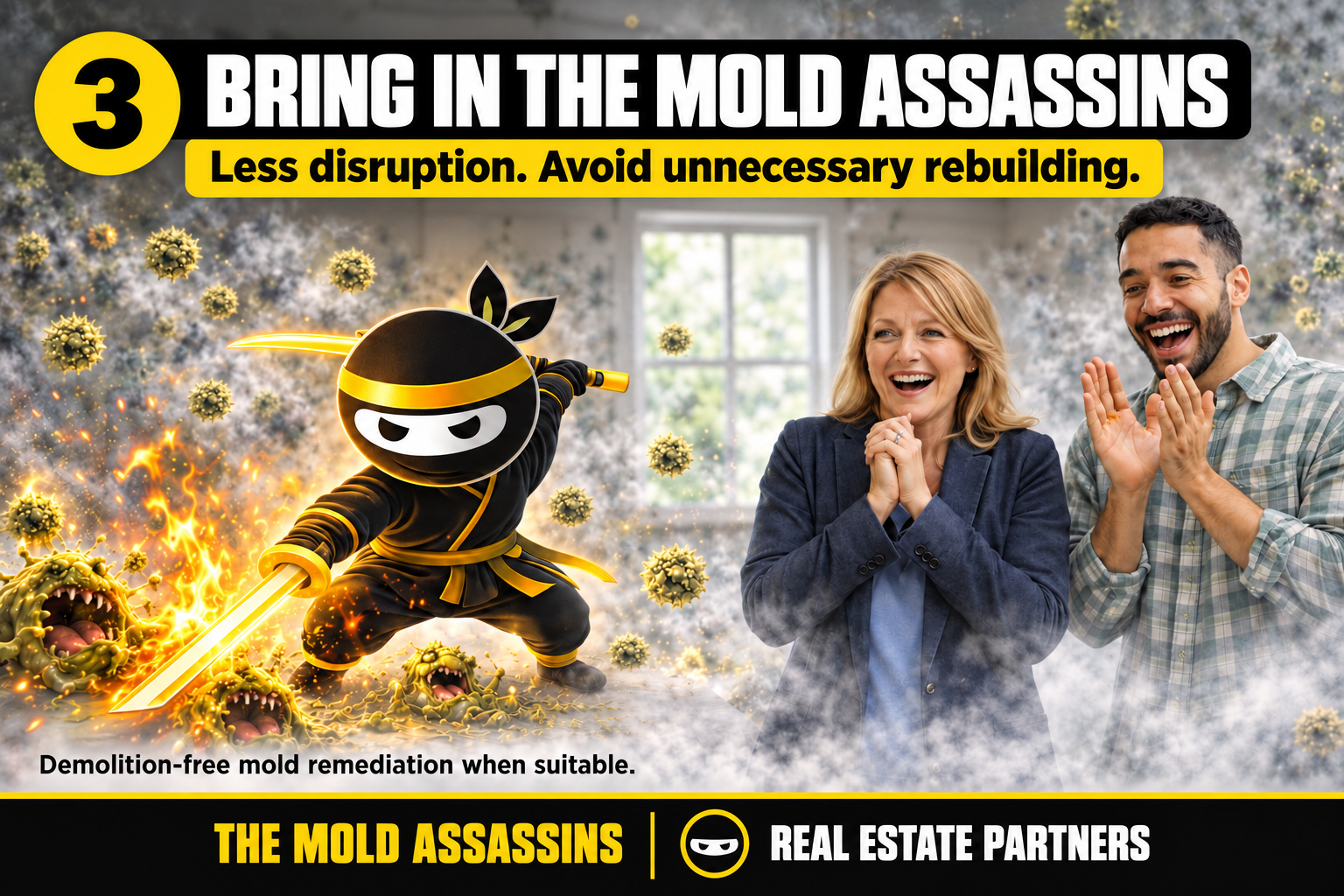
3. Bring in The Mold Assassins
"Less disruption. Avoid unnecessary rebuilding."
The Mold Assassins arrive with demolition-free mold remediation when suitable. Less disruption, zero drywall tear-outs, and rapid treatment save the deal in an afternoon.
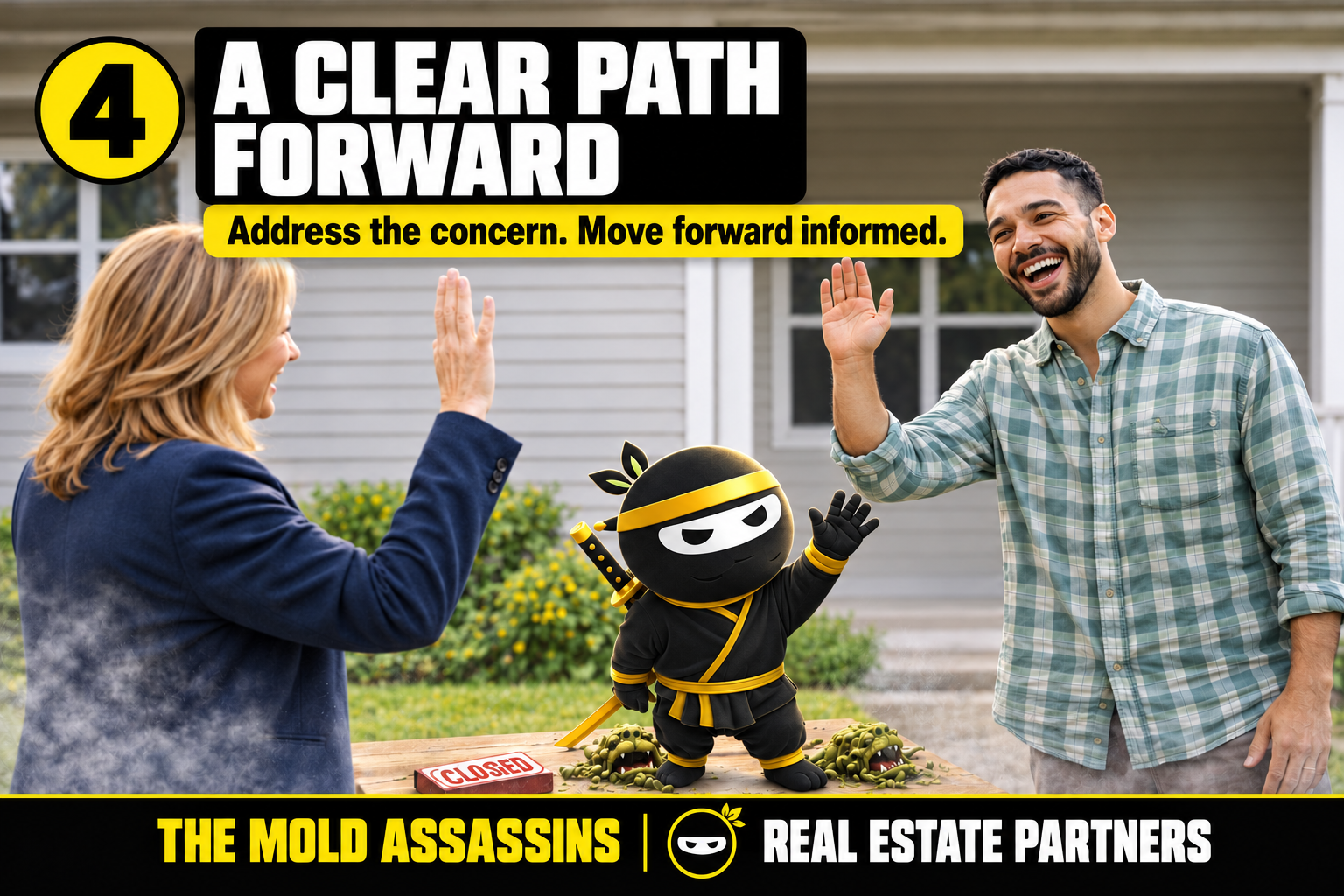
4. A Clear Path Forward
"Address the concern. Move forward informed."
Address the concern. Move forward informed. Independent post-treatment air sampling and clearance certificates verify clean air so buyer and agent celebrate moving forward.

5. Deal Saved. Next Chapter Begins.
"A confident buyer. A happy agent."
A confident buyer. A happy agent. Keys in hand outside their clean, mold-free home next to the SOLD sign, backed by our 12-Month Free Re-Treatment Warranty.
Under Contract With Mold Found in Inspection?
Don't let mold kill the deal. The Mold Assassins delivers rapid inspections, same-day quotes, ~6 hour demolition-free treatments, and post-testing clearance letters that keep closings on schedule — so your buyers hold their keys on time.
Rolling Power: The Mold Assassins Mobile Rigs
We don't show up with a pump sprayer and a wet rag. Our custom-wrapped mobile remediation rigs carry hospital-grade dry fog infusion plants, self-contained power, and precision FLIR® infrared diagnostic equipment directly to your curb across Metro Atlanta.

Mobile Remediation Rig & Enclosed Equipment Trailer
Equipped with commercial-scale dry fog generators, compressor banks, hospital-grade denaturing agents, and independent power. Capable of treating full-scale homes, multi-story buildings, and commercial facilities in a single pass.

Rapid-Response Mold Assassin Truck
Fully loaded with FLIR® infrared thermal scanners, digital moisture meters, air sampling pumps, and compact dry fog infusion units for rapid residential inspections and urgent treatments.
Self-Contained Mobile Power
We bring our own high-output generators and compressed-air delivery plants. We don't overload your breakers or tie up your power lines during intensive treatment cycles.
Hospital-Grade Dry Fog Plant
Equipped with patented micro-mist infusion systems that aerosolize EPA-registered mold sterilants and antimicrobials to sub-micron size for 100% whole-structure coverage.
FLIR® & Lab Testing Onboard
Every truck carries high-resolution infrared thermal cameras, calibrated pinless moisture meters, and certified spore-trap air sampling cassettes ready on arrival.
Serving All Greater Atlanta Communities
Our rapid-response mobile units dispatch daily across Fulton, Forsyth, Gwinnett, Cobb, and Cherokee counties.
Ready For Clean, Pure, Mold-Free Air?
Schedule your free no-obligation mold inspection now and get 25% off air quality lab testing when you request online.